Transpacific emerges as liner shipping’s golden trade
Click:
Time:2026-11-05 16:13:42
Transpacific emerges as liner shipping’s golden trade
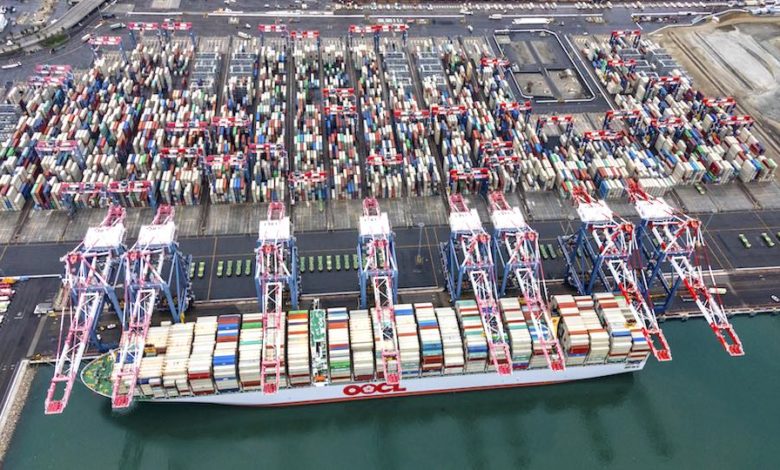
The transpacific has become the most lucrative major container shipping trade in the world, with carriers generating five times more spot revenue per nautical mile on the Shanghai–Los Angeles route than on shipments to North Europe via the Cape of Good Hope.
New analysis from Alphaliner shows that the extraordinary strength of the US trade has persisted well beyond the traditional peak season, with freight rates approaching levels last seen during the pandemic.
At approximately $7,500 per feu, the 5,775 nautical mile Shanghai–Los Angeles voyage generates $1.30 in revenue per container per nautical mile, compared with just 26 cents on Shanghai–Rotterdam via the Cape, or 34 cents via Suez. Shanghai–New York generates 96 cents per nautical mile, with spot rates remaining above $10,000 per feu since late August. These figures represent revenue rather than profit, but nevertheless illustrate the extraordinary divergence between the industry’s principal east–west trades.
Carriers are responding by throwing more tonnage at the Pacific. MSC recently upgraded its Sentosa service with 23,600 teu megamaxes, replacing vessels of approximately 15,000 teu. ZIM, which already deploys 52% of its capacity on the Pacific, will launch another China–California service in December.
The boom is feeding directly into corporate earnings. COSCO reported third-quarter liner profits of $2.66bn, double the year-earlier level, with transpacific revenue surging 61.2%.
Freightos confirms that the transpacific’s extraordinary resilience has continued into November. Its latest assessment places Asia–US west coast rates at $8,340 per feu and east coast rates at $9,911.
Freightos noted that rates remain approximately $5,500 per feu above pre-peak-season levels, while the approaching Lunar New Year demand cycle could limit the extent of any correction.
However, signs of cooling are emerging. Drewry reported Shanghai–Los Angeles rates falling 6% to $7,514 last week, with Shanghai–New York declining 5% to $9,631. The consultancy expects further weakness as US ocean imports are forecast to decline 11% month-on-month in November.
Meanwhile, Sea-Intelligence has warned that transpacific capacity deployment is reaching unprecedented levels. Weekly Asia–US west coast capacity is expected to hit 400,000 teu in November, although congestion and delayed departures are inflating the figures.


点击右上角
分享给朋友吧







 Long by picture save/share
0


Global unified service hotline:
020-32019975-815
Whatsapp:15360598727
Email:ygwhw@ygw-gz.com
Advertisement & News
Information
-
【Practical cases】 Emirates rolls out enhanced air cargo service for data center operators
-
【Practical cases】 Record supply growth pushes container fleet towards 50m teu by 2030
-
【Practical cases】 Emirates rolls out enhanced air cargo service for data center operators
-
【Practical cases】 Logistics UK welcomes plan to remove EU border checks on food
-
【Practical cases】 Major liners set to resume all Asia-Europe services through Suez
-
【Practical cases】 Brazil approves Saipem-Subsea 7 merger on condition of vessel sale
Contact us
Address: Rm301,No240,Zhenxing building Kaifa Avenue Econimic&Technological Development District,Guangzhou (Huangpu District)
Registered Address: No.81, Baohuan East Road, Economic & Technological Development District,Guangzhou (Huangpu District Free Trade Zone )
Email:ygwhw@ygw-gz.com
Service tel

+86 15360598727
Whatsapp customer service
+86 15360598727
粤港湾(广州)国际货运代理有限公司 All Right Reserved 粤ICP备2021055091号
 客服1
 客服2